Setting the Season in Motion Before Bud Break
From the outside, February in the vineyard can look quiet. The vines are dormant. The ground is wet. Work appears steady but uneventful.
In the Willamette Valley, the crucial decisions made this month shape the vineyard’s success for the season ahead.
Spring comes fast. As soils dry and temperatures rise, growth becomes rapid. February is when we prepare the vineyard—out in the rows and behind the scenes—for this quick shift.
Pruning and vine balance in winter
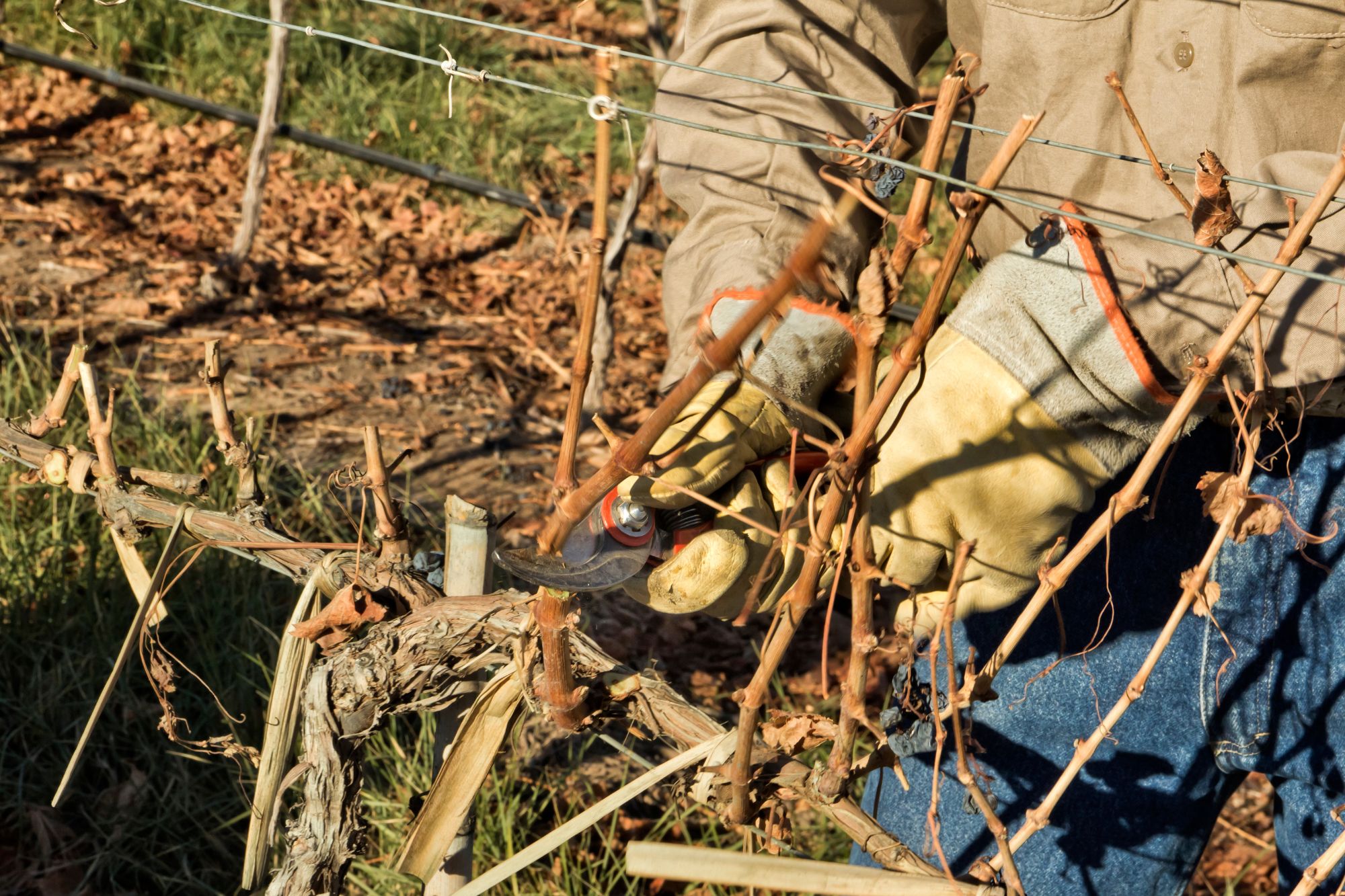
At this stage, pruning is at the center of the work. In the Willamette Valley, cane pruning is labor-intensive and demands both experience and precision. Every cut made now influences how the vine will grow this season and perform for years to come.
There is no such thing as unskilled labor in the vineyard during February, when crews work through cold, wet conditions to make decisions affecting vine balance, crop load, and long-term health. Their skill directly shapes what the vineyard will become once growth begins.
There has been more discussion in recent years around “sap flow” pruning. This approach involves making pruning cuts that follow the vine’s natural wood and vascular pathways, rather than repeatedly cutting back to the same points on the trellis. By doing so, the vine’s internal channels that transport water and nutrients—its sap flow—are preserved. The goal is straightforward: protect these pathways so growth stays balanced over time.
The effects of pruning show up later. If vines are unbalanced, later adjustments for shoot or fruit thinning become more intensive. Achieving balance now means a smoother season and fewer corrections, supporting sustainability and consistency across vintages.
Coordinating Vineyard Operations Before Spring Growth
While crews move through the rows, preparation continues in less visible ways: equipment is serviced and calibrated, spray programs are refined, budgets are reviewed, and safety training and licenses are brought up-to-date.
Coordinating activities across multiple sites is crucial so each vineyard receives the attention it needs at the right time. Vineyard managers work closely with viticulture leadership to align decisions with both site conditions and long-term goals.
This coordination isn’t visible from the road but is vital. Effective farming depends on clear alignment among the site, the crew, and the vineyard owner’s goals.
Why February Decisions Matter Later in the Season
Given a challenging grape market, the clarity in February’s decisions matters. Pushing vines year after year without intention can lead to declining yields and fruit quality. February offers a chance to pause, evaluate, and ensure that each vineyard is farmed according to its specific needs.
Strong relationships and regular communication help guide those decisions. Each site is different, and farming sustainably means understanding those differences—not applying the same approach everywhere.
By bud break, February’s foundational work determines how the rest of the season will unfold.